Romance Vintage: A Serif Font That Elevates Handmade Products
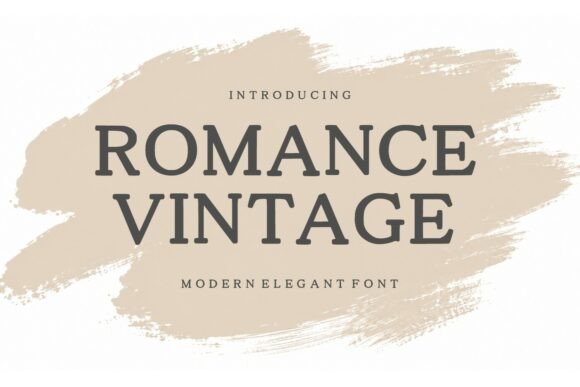
As someone who designs printable wall art, prints labels for small-batch candles, and cuts vinyl stickers for boutique gift shops, I’ve learned that the right serif font doesn’t just look pretty—it builds trust, signals quality, and quietly tells your customer *this was made with care*. Romance Vintage is one of those rare typefaces that lands perfectly between vintage warmth and modern polish. It’s not overly ornate, but it’s never plain. Its refined proportions, gentle curves, and classic serif details give every word a quiet confidence—ideal when your product needs to feel both timeless and intentional.
I use Romance Vintage most often where first impressions matter: on greeting card covers, wedding welcome signs, candle jar labels, and boutique hang tags. Its letterforms hold up beautifully at small sizes—think 8–10pt printed on kraft paper tags or 12pt cut from matte vinyl for mason jar labels. Unlike some delicate serifs that blur or break in Cricut Design Space or Silhouette Studio, Romance Vintage renders cleanly even at 6mm height. That reliability means less trial-and-error when prepping SVG files or mockups for Etsy listings.
For physical products, readability isn’t optional—it’s part of your brand promise. Romance Vintage strikes a thoughtful balance: its open counters and generous x-height make it legible on product packaging viewed at arm’s length, while its subtle contrast and graceful terminals add character without sacrificing clarity. I’ve used it for seasonal farmhouse signs (“Spring Market • Fresh Eggs • Local Honey”) and it reads instantly—even in soft natural light. On digital printables like planner pages or printable quote art, it adds sophistication without feeling stiff or corporate.
What makes Romance Vintage especially practical for crafters is how well it adapts across formats. On a linen-wrapped invitation suite, it conveys elegance. On a heat-transfer vinyl tote bag, it feels grounded and authentic. On a sticker sheet for a stationery shop, its consistent stroke weight ensures clean cuts and crisp edges. And because it’s a modern serif—not a historical revival—it avoids looking costumey or dated. It feels like *your* voice, just elevated.
It shines brightest in display roles: titles, headings, monograms, and short phrases. Think “Est. 2021” stamped on a soap label, “Hand-Poured” beside a candle photo, or “Thank You” centered on a thank-you card. While it’s not intended for long paragraphs (like full invitation wording or product descriptions), pairing it with a clean sans serif—say, a neutral geometric font for body text—creates instant hierarchy and visual harmony. For wedding stationery, I’ll often pair Romance Vintage with a delicate script font for names or accents, letting the serif carry the structure and the script add personality.
When designing for real-world production, I always check what’s included: Romance Vintage comes with standard OpenType features like ligatures and stylistic alternates—small touches that elevate “The” or “And” into something more considered. These aren’t just decorative; they help avoid awkward letter collisions on tight labels or narrow tags. The font also includes multilingual support for Western European languages, which matters if you sell internationally or create bilingual holiday cards. File formats are straightforward (.OTF and .TTF), so whether you’re importing into Canva, Affinity Designer, or Adobe Illustrator, it loads cleanly and embeds reliably in PDF templates.
One thing I always double-check before listing anything for sale: commercial licensing. Romance Vintage is a premium font licensed for commercial use—including physical products, digital downloads, SVG files, templates, and client work. That means you can confidently use it on printable wall art sold as a digital download, on a mug design uploaded to Printful, or in a Canva template bundle for fellow creators. Just be sure to review the license terms directly—some versions include extended rights for unlimited end products, while others may require an upgrade for large-scale merchandise. When in doubt, treat it like a design asset you’d invest in for long-term brand consistency—not a one-off download.
In practice, here’s how Romance Vintage shows up in my shop week after week:
- Candle & soap labels: Paired with a thin sans serif for scent names and net weight—Romance Vintage carries the brand name front and center.
- Wedding signage: Used for “Welcome,” “Bar,” and “Sweet Table” on chalkboard-style prints—its curves soften the formality without losing polish.
- Holiday packaging: On red-and-kraft gift boxes for Christmas cookies or handmade preserves—its warmth reinforces “handmade” without leaning into cliché.
- Digital printables: Featured in quote-based wall art (“Gather • Grow • Give”) and minimalist planner headers—clean enough for daily use, distinctive enough to stand out in a crowded marketplace.
- Tote bags & apparel: Screen-printed in single-color layouts—its strong serifs hold shape even at medium scale, and its rhythm keeps text feeling balanced, not heavy.
Because it’s rooted in classic serif structure but refined for today’s tools and tastes, Romance Vintage helps your work feel cohesive across mediums. A customer sees it on your Instagram story, then on your product tag, then on your printable planner—they begin to recognize it as *yours*. That kind of subtle brand continuity is hard to build with generic fonts or overused system typefaces. With Romance Vintage, you’re not just choosing a font—you’re choosing a tone, a texture, and a quiet signature that supports your handmade values without shouting them.
If you’re building a small shop where every detail reflects intention—from the knot on your twine-wrapped package to the curve of a lowercase “e”—Romance Vintage is worth keeping in your core design toolkit. It’s the serif font that works as hard as you do, and looks even better doing it.